
The Daily Brain Workout Apps People Actually Stick With in 2026
Most people do not download brain-training apps because they want to become chess grandmasters or memory champions.
They download them because they feel mentally scattered.
For some, it is constantly forgetting why they walked into a room. For others, it is losing focus during work meetings, struggling to retain names, or feeling mentally sluggish after hours of scrolling social media. Short-term memory and attention fatigue have quietly become one of the biggest modern productivity complaints.
That is exactly why brain-training apps continue dominating both the Apple App Store and Google Play Store in 2026.
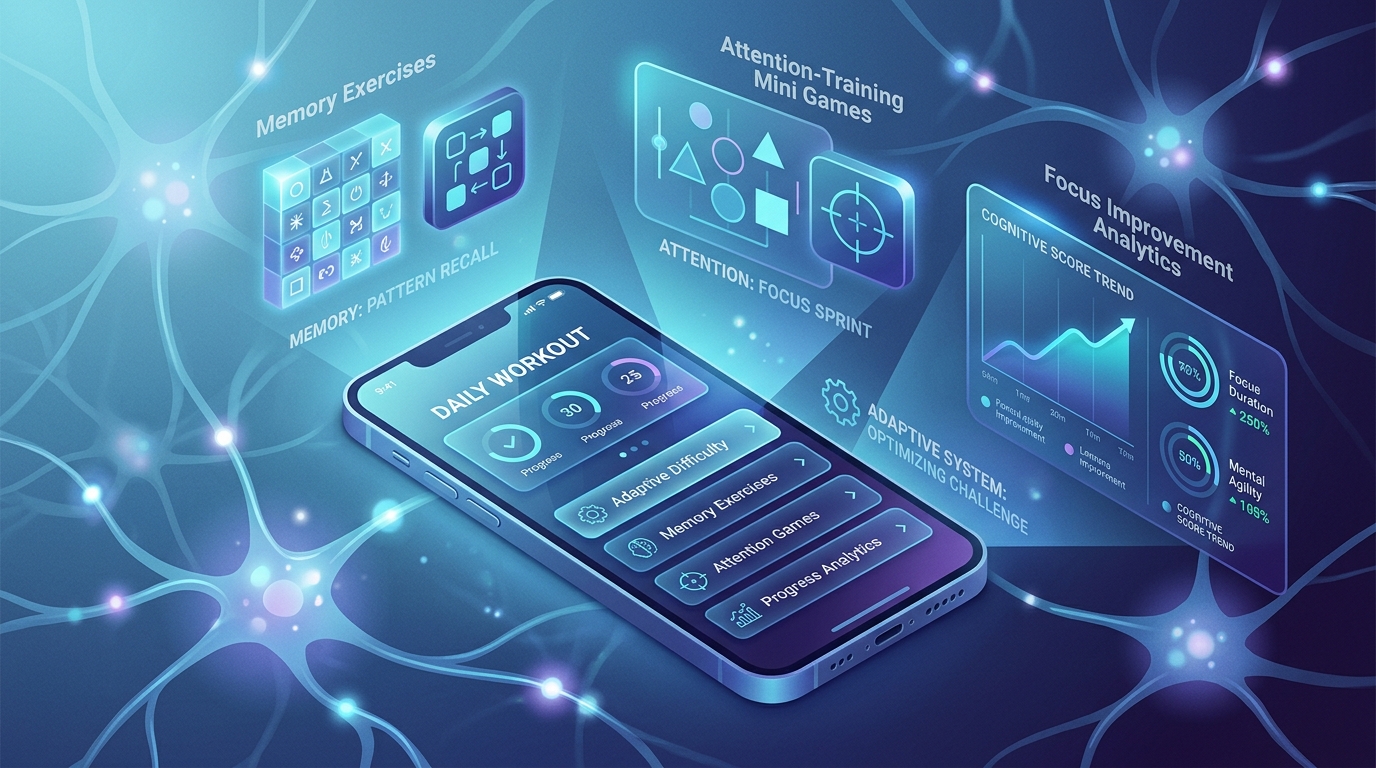
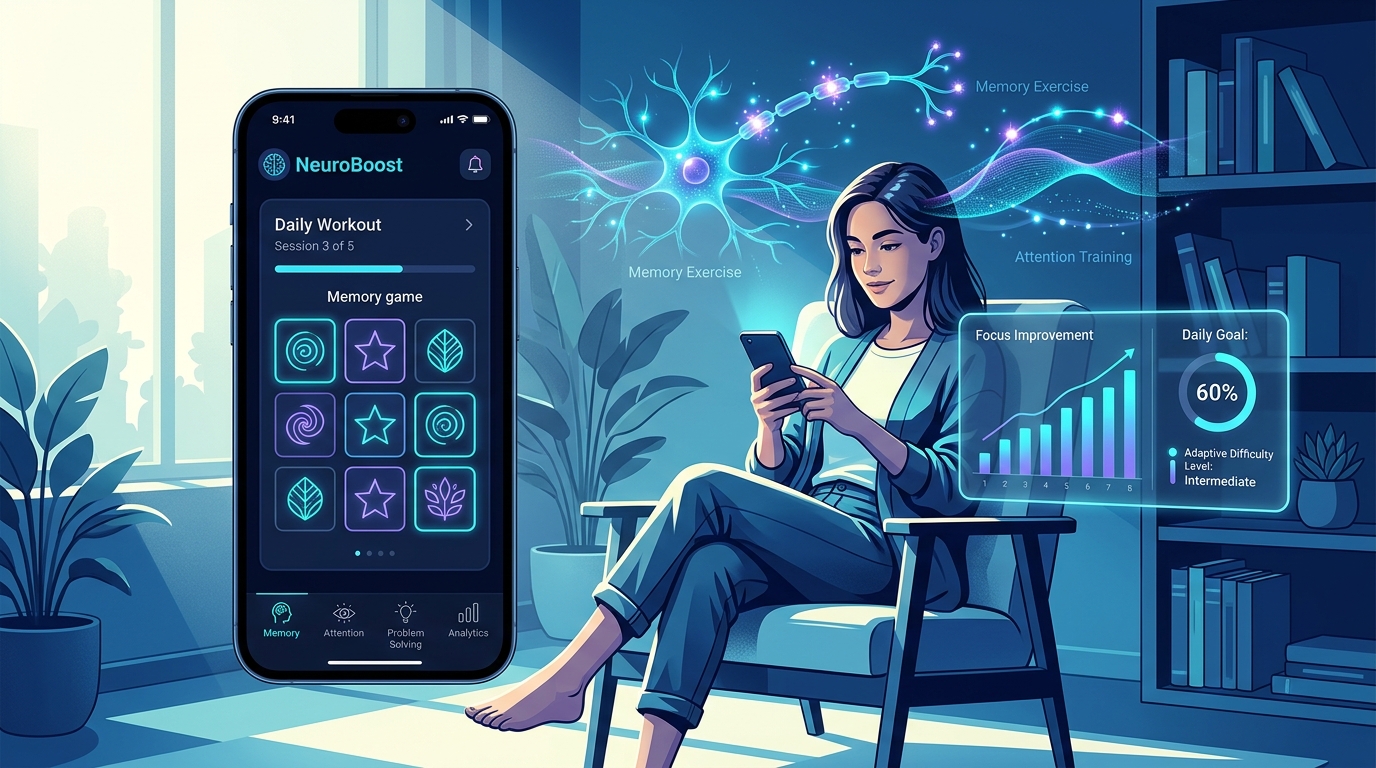
The best apps are no longer just collections of random mini-games. Many now use adaptive difficulty systems, cognitive benchmarking, memory drills, attention exercises, and personalized training routines designed to keep users engaged daily.
But after testing the major brain-training apps currently active in the US app ecosystem, one thing became very obvious: many apps are far better at building daily habits than actually delivering useful mental stimulation.
Some feel polished for a week and repetitive by week three. Others bombard users with aggressive subscription prompts before proving any real value.
For this guide, the testing focused specifically on apps designed for daily brain workouts, short-term memory improvement, and long-term consistency.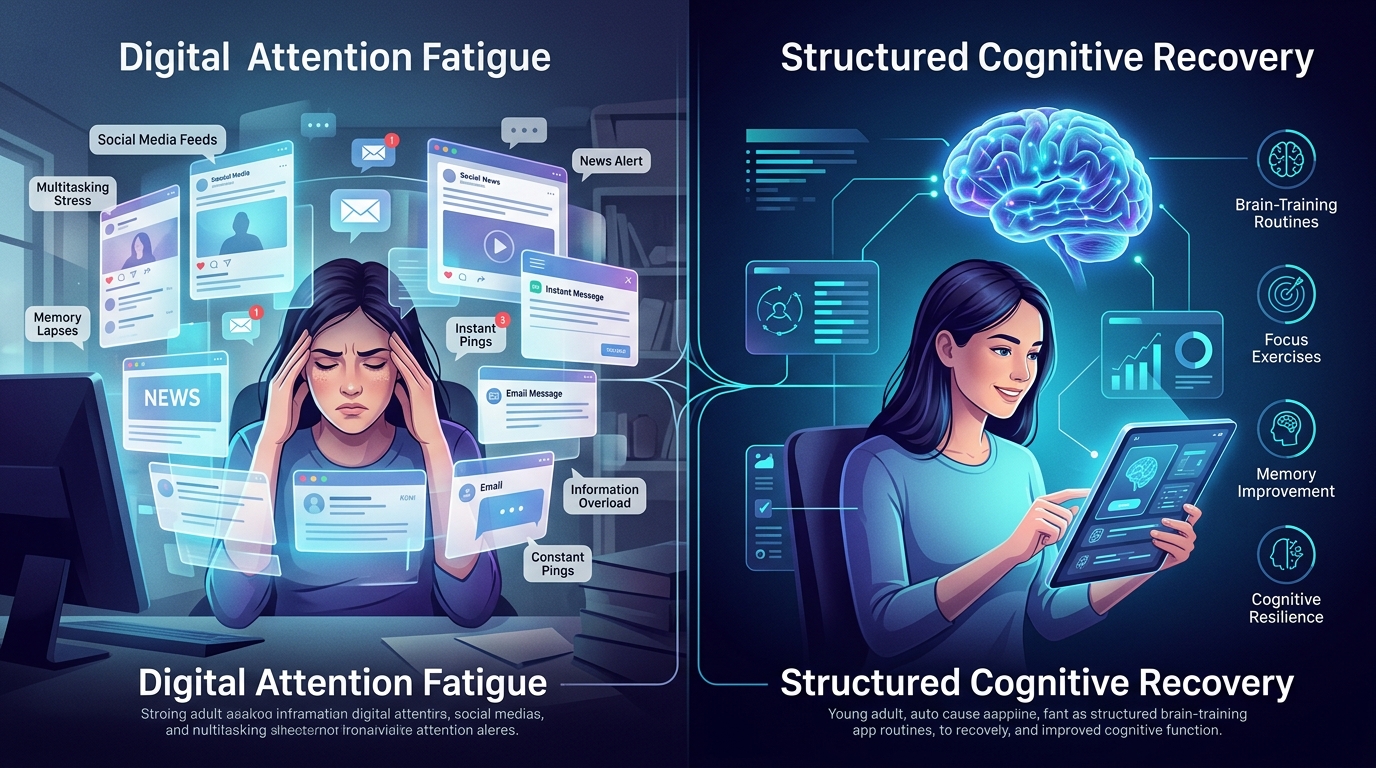
The evaluation criteria included:
Quality of memory-focused exercises
Daily usability and habit formation
Variety of cognitive activities
Adaptive difficulty systems
Pricing transparency
Free-tier usefulness
Long-term engagement
These were the apps that genuinely stood out.
Lumosity (iOS & Android)
The Reality Check: Still the Most Recognizable Brain Training App for a Reason
Even after years of competitors trying to dethrone it, Lumosity remains one of the strongest all-around brain-training apps available.
During testing, the biggest advantage was variety. The app includes dozens of games targeting memory, attention, flexibility, speed, and problem-solving. Multiple 2026 reviews still rank Lumosity among the strongest mainstream brain-training platforms because of its polished design and broad cognitive coverage.
The short-term memory exercises consistently felt engaging rather than frustrating. Tasks involving pattern recall, sequence tracking, and divided attention became noticeably harder over time thanks to adaptive difficulty scaling.
Another major strength is habit formation.
Lumosity’s daily workouts are fast enough to feel manageable during busy schedules, which matters more than many users realize. Multiple Reddit users specifically described the app as easy to incorporate into morning or lunchtime routines.
However, repetition eventually becomes noticeable after several weeks. Multiple long-term users also complained that game rotation starts feeling predictable after extended use.
The free version allows limited daily gameplay, while Lumosity Premium generally costs around $11.99 monthly or about $59.99 annually.
Pros
Large variety of memory and attention games
Excellent mobile design
Strong habit-building structure
Adaptive difficulty works well
Daily workouts feel manageable
Cons
Repetition appears over time
Free tier is heavily limited
Premium subscription is relatively expensive
Peak (iOS & Android)
The Reality Check: The Best App for Short Daily Mental Workouts
Peak consistently felt like the most modern and mobile-friendly brain-training app tested.
The app focuses heavily on short sessions, which turned out to be one of its biggest strengths. Multiple recent comparisons praised Peak for its polished game design and stronger daily engagement loops compared to older competitors.
During testing, Peak’s memory exercises felt especially well-balanced between challenge and accessibility. The games rarely became mentally exhausting, which helped maintain consistency over longer periods.
Another standout feature is the “Coach” system, which recommends daily training based on individual performance patterns. The personalization is not revolutionary, but it did make workouts feel more tailored than generic puzzle rotations.
The interface also deserves credit. Everything from animations to navigation feels smoother and more modern than many competitors in this category.
However, Peak’s strongest features sit behind the Pro subscription. Some users also criticized the app’s upselling of premium coaching features.
Peak offers a free version with limited access, while Peak Pro generally costs around $4.99 monthly or about $34.99 annually.
Pros
Excellent mobile experience
Strong short-session design
Memory exercises stay engaging
Personalized daily workouts
More affordable than Lumosity
Cons
Best features require subscription
Limited free gameplay
Long-term variety still has limits
Elevate (iOS & Android)
The Reality Check: Best for Verbal Memory and Mental Sharpness
Elevate approaches brain training differently from most competitors.
Instead of focusing heavily on abstract mini-games, the app targets practical cognitive skills tied to reading, writing, vocabulary, speaking, and math. Multiple recent app comparisons still recommend Elevate for users seeking mental sharpness tied more closely to everyday communication skills.
During testing, this made the app feel more useful in real life.
Memory exercises often involved retaining information from passages, processing instructions quickly, or mentally manipulating language patterns. That practical emphasis made progress feel more tangible than purely score-based puzzle apps.
The app’s clean interface also made it extremely approachable for beginners.
However, users primarily seeking visual memory training or reaction-speed exercises may find Elevate narrower than Lumosity or Peak. Multiple long-term users also mentioned that content repetition becomes noticeable eventually.
The free version includes limited daily exercises, while Elevate Pro generally costs around $39.99 annually depending on promotions.
Pros
Strong language-based cognitive training
Excellent interface design
Practical real-world skill focus
Easy onboarding
Good progression tracking
Cons
Less visual-memory variety
Daily limits on free version
Advanced users may want deeper complexity
BrainHQ (iOS & Android)
The Reality Check: The Most Research-Oriented Brain Training Platform
BrainHQ immediately felt different from the more gamified competitors.
The app leans heavily into neuroscience research and cognitive assessment rather than colorful entertainment. Multiple 2026 reviews still rank BrainHQ among the strongest evidence-focused cognitive training platforms available.
During testing, the exercises often felt more clinically designed than game-like.
Tasks focusing on attention control, visual processing speed, auditory memory, and reaction timing became surprisingly demanding after only a few sessions. The app also adjusted difficulty aggressively based on performance.
For users genuinely interested in cognitive training rather than casual puzzle entertainment, this structure felt more serious and purposeful.
However, BrainHQ is noticeably less fun than Peak or Lumosity.
The interface feels functional rather than playful, and some users may find the exercises too repetitive or intense for casual daily use.
Pricing is also higher than several competitors. BrainHQ subscriptions generally cost around $14 monthly depending on plan structure.
Pros
Strong research-oriented structure
Excellent attention and speed drills
Adaptive difficulty works well
Feels more scientifically grounded
Good long-term progression tracking
Cons
Less visually engaging
More clinical than entertaining
Premium pricing is high
NeuroNation (iOS & Android)
The Reality Check: The Most Balanced Budget-Friendly Option
NeuroNation quietly became one of the most interesting apps tested because it balanced affordability with genuinely solid memory training.
The app focuses heavily on concentration, working memory, and mental agility. Multiple recent comparisons praised it as one of the better lower-cost alternatives to premium-heavy competitors.
During testing, the memory exercises felt surprisingly challenging, especially tasks involving rapid information retention and mental flexibility.
The app also handled personalization well. Training sessions adapted gradually without creating the frustration spikes that sometimes appeared in harder BrainHQ exercises.
Another major advantage is pricing flexibility. NeuroNation’s subscription costs remain lower than many mainstream competitors while still offering substantial content.
However, the interface feels somewhat dated compared to Peak or Elevate. Game variety also feels smaller during longer-term testing.
Premium subscriptions generally cost around $8.99 monthly or about $59.99 annually.
Pros
Strong value for the price
Good working-memory exercises
Personalized progression feels balanced
Less aggressive monetization
Solid concentration training
Cons
Smaller game library
Older-looking interface
Less polished overall presentation
The Final Verdict
For users specifically looking to improve short-term memory while maintaining a realistic daily habit, Peak stood out as the strongest overall choice in 2026.
It consistently delivered the best balance of engaging memory exercises, approachable session length, modern design, and long-term usability during testing. Most importantly, it avoided feeling like homework — which is exactly where many brain-training apps fail.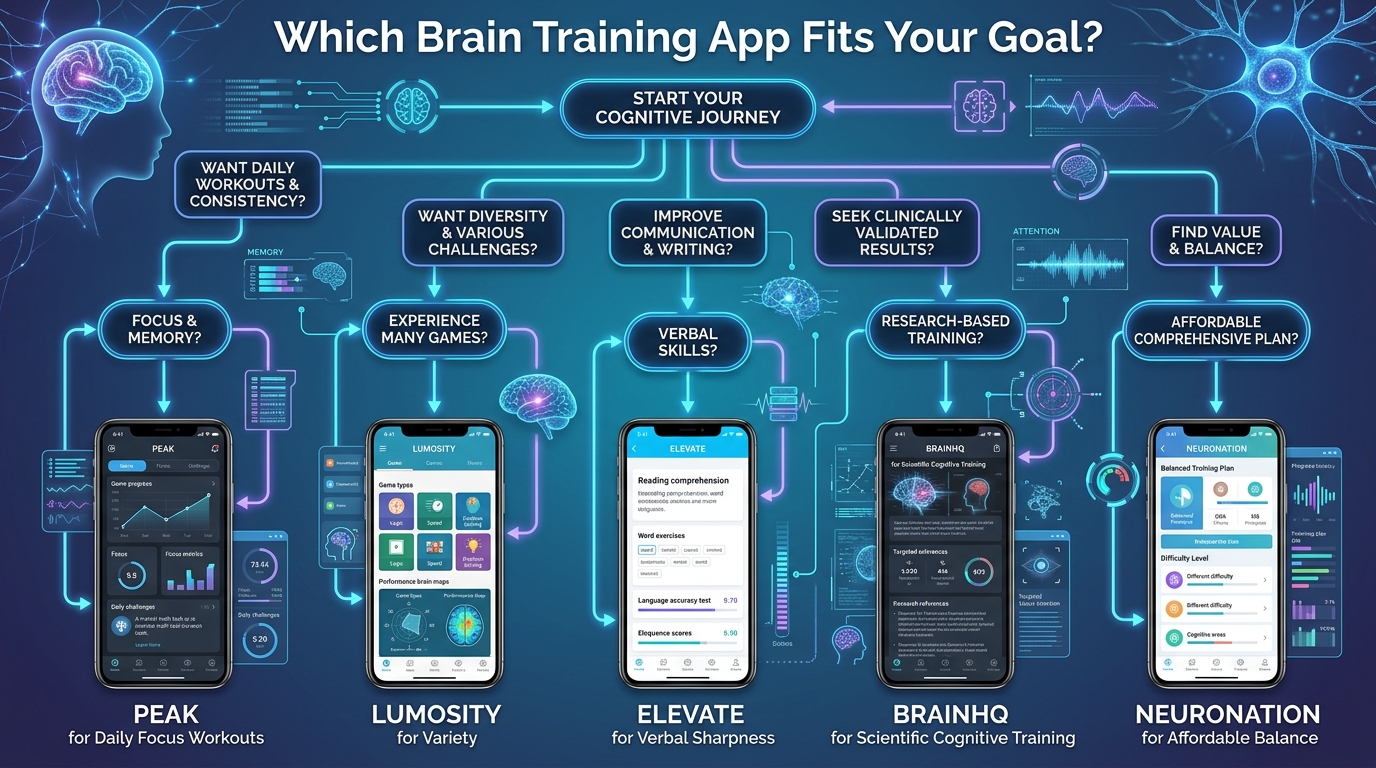
That said, the best app still depends heavily on individual goals:
Choose Lumosity for the broadest variety of brain games.
Choose Peak for short, polished daily workouts.
Choose Elevate for language and communication-focused mental training.
Choose BrainHQ for research-oriented cognitive exercises.
Choose NeuroNation for a more affordable balanced option.
The biggest lesson from testing these apps is that consistency matters far more than intensity. The strongest brain-training platforms are not necessarily the most scientific or complicated — they are the ones users genuinely continue opening every day.