

Sound Smarter Without Sounding Pretentious: The Best Apps for Building an Advanced English Vocabulary Daily
A surprising number of adults speak English fluently but still feel frustrated by the same problem: they know exactly what they want to say, yet cannot find the precise word fast enough.
The issue becomes even more obvious in professional settings, academic writing, presentations, interviews, public speaking, and advanced reading. People often understand sophisticated vocabulary when they hear it, but rarely feel confident using those words naturally themselves.
That gap is exactly why vocabulary-building apps have evolved far beyond simple digital dictionaries.
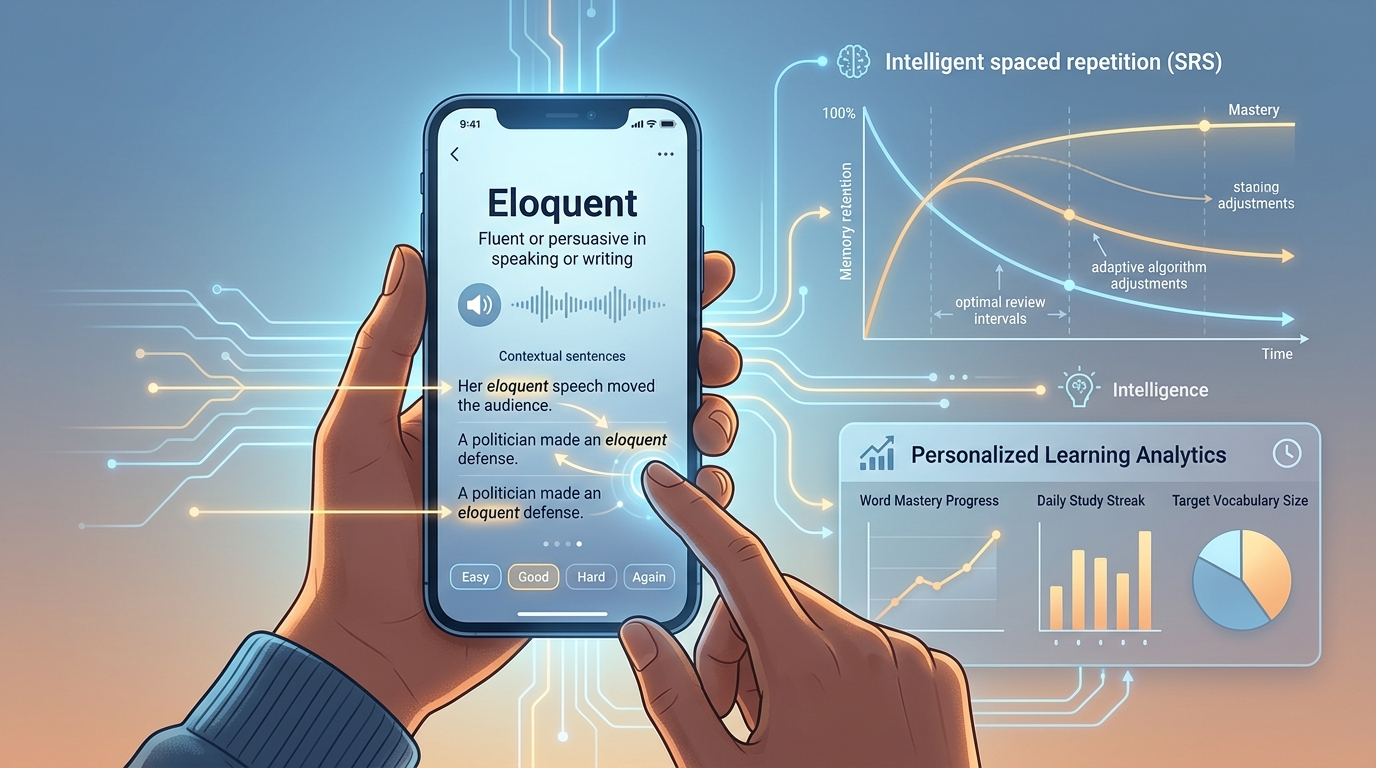
The best apps now combine spaced repetition, contextual learning, pronunciation tools, etymology, memory exercises, reading integration, and adaptive quizzes that gradually help users internalize advanced English vocabulary rather than merely memorize random word lists.
But after testing the most popular vocabulary apps currently active on the US Apple App Store and Google Play Store in 2026, one thing became very clear: many apps overwhelm users with SAT-style memorization drills that quickly become exhausting. Only a handful actually make long-term vocabulary growth sustainable enough for daily use.
For this guide, the testing focused specifically on apps designed to help adults intentionally expand advanced English vocabulary through consistent daily practice.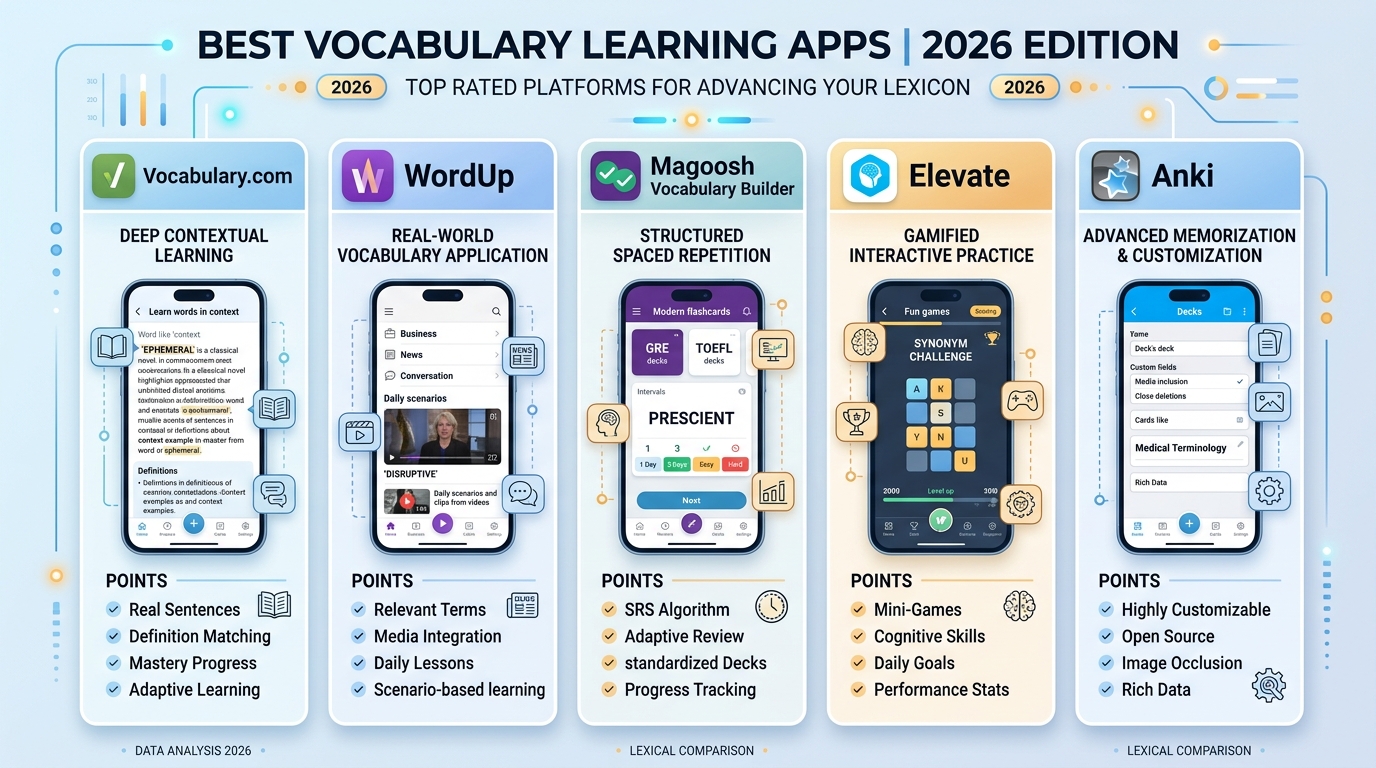
The evaluation criteria included:
Quality of advanced vocabulary
Long-term retention tools
Daily usability
Contextual learning quality
Pronunciation support
Motivation and habit design
Pricing transparency
These were the apps that genuinely stood out.
Vocabulary.com (iOS & Android)
The Reality Check: Still the Smartest Overall Vocabulary Learning System
Vocabulary.com consistently delivered the strongest long-term vocabulary learning experience during testing.
Unlike many apps that simply throw random difficult words at users, Vocabulary.com uses an adaptive learning system that adjusts difficulty based on how each person responds to quizzes and word usage exercises. Multiple education-focused reviews still rank it among the best vocabulary-building platforms available.
During testing, the biggest strength was contextual teaching.
Instead of relying on dictionary-style definitions alone, the app constantly reinforces vocabulary through example sentences, synonym comparisons, short explanations, and repeated usage exposure. That makes words significantly easier to remember naturally over time.
The app also performed especially well for advanced learners because it introduces nuanced vocabulary gradually rather than dumping massive academic word lists all at once.
Another standout feature is personalization. After several days of use, the app became noticeably better at surfacing unfamiliar but realistically useful vocabulary instead of obscure trivia words that rarely appear in real conversation.
However, the interface itself feels more educational than modern. Users looking for highly visual or gamified experiences may find it slightly dry compared to newer competitors.
The app operates through subscription pricing, with premium access generally costing around $4.99 monthly or annual plans depending on platform.
Pros
Excellent contextual learning
Smart adaptive difficulty system
Strong long-term retention design
High-quality advanced vocabulary
Useful example sentences
Cons
Interface feels somewhat dated
Less visually engaging
More academic than casual
WordUp (iOS & Android)
The Reality Check: The Best App for Learning Words People Actually Use
WordUp approached vocabulary learning differently from nearly every competitor tested.
Instead of emphasizing obscure academic terminology, the app prioritizes high-frequency advanced English words based on how commonly they appear in real media, books, movies, news, and conversations. Several app comparison reviews continue recommending WordUp for practical daily vocabulary growth.
During testing, this immediately made the learning experience feel more useful.
The app constantly reinforces vocabulary using clips from movies, TV shows, interviews, songs, and news examples. That contextual exposure genuinely helps learners understand not only definitions, but also tone, nuance, and natural usage patterns.
One especially strong feature is the ranking system that identifies which advanced English words provide the highest real-world value.
The app also includes pronunciation audio, spaced repetition review, and personalized progress tracking.
Visually, WordUp felt among the most modern and engaging vocabulary apps tested overall. Daily practice sessions remained surprisingly addictive without becoming exhausting.
However, some users may dislike the heavy gamification elements and frequent premium upgrade prompts.
The app offers free access with limited features, while premium subscriptions generally range around $9.99 monthly or discounted annual plans.
Pros
Excellent real-world usage examples
Modern and engaging interface
Strong contextual reinforcement
Helpful frequency-ranking system
Great pronunciation support
Cons
Frequent premium prompts
Gamification may annoy some users
Occasional content repetition
Magoosh Vocabulary Builder (iOS & Android)
The Reality Check: Best for Structured Advanced Word Memorization
Magoosh Vocabulary Builder performed especially well during testing for users who enjoy more structured progression and measurable learning goals.
Originally designed partly around GRE, SAT, and advanced academic preparation, the app focuses heavily on curated vocabulary levels, quizzes, and repetition systems. It remains widely recommended among students and advanced English learners.
During testing, the biggest advantage was organization.
Words are grouped into manageable difficulty categories, allowing learners to steadily increase complexity without feeling overwhelmed. The quiz system also proved surprisingly effective for long-term recall.
Another strength is simplicity. Unlike apps overloaded with social features and gamified distractions, Magoosh remains very focused on direct vocabulary acquisition.
The app also works extremely well offline, making it useful for commuting or travel.
However, the learning style feels more academic and test-oriented than conversational. Some vocabulary choices occasionally leaned toward formal exam preparation rather than practical everyday sophistication.
The core app is free with optional premium educational services connected to broader Magoosh programs.
Pros
Strong structured progression
Excellent memorization reinforcement
Clean distraction-free interface
Good offline functionality
Free core vocabulary training
Cons
Less conversational focus
More academic tone
Limited multimedia learning
Elevate (iOS & Android)
The Reality Check: The Best App for Making Vocabulary Practice Feel Fun
Elevate is technically a broader brain-training platform rather than a pure vocabulary app, but its language and vocabulary modules consistently stood out during testing.
The app combines vocabulary training with reading comprehension, grammar, writing clarity, listening skills, and verbal precision exercises. Multiple review roundups still rank Elevate among the strongest language-oriented cognitive training apps available.
During testing, the biggest advantage was engagement.
Exercises feel closer to short interactive games than traditional vocabulary drills, which dramatically reduces burnout during daily use. The app also adapts difficulty gradually based on performance, creating a satisfying sense of progression.
Another standout feature is writing-focused vocabulary application. Many exercises require users to identify nuanced word choices and improve sentence clarity rather than simply memorize definitions.
The visual design also feels polished and modern without becoming distracting.
However, Elevate is less specialized for advanced vocabulary depth than Vocabulary.com or WordUp. Users seeking highly sophisticated literary or academic vocabulary may eventually hit limitations.
The app includes limited free daily training, while premium subscriptions generally cost around $39.99 annually depending on platform promotions.
Pros
Extremely engaging exercises
Strong writing-related vocabulary practice
Polished interface
Good habit-building design
Adaptive difficulty progression
Cons
Less advanced vocabulary depth
Broader focus beyond vocabulary
Free version feels restricted
Anki (iOS / Android)
The Reality Check: The Most Powerful Option for Serious Self-Directed Learners
Anki was easily the least beginner-friendly app tested — but also potentially the most powerful.
Unlike traditional vocabulary apps, Anki uses customizable spaced repetition flashcards that learners build or download themselves. The platform remains enormously popular among language learners, medical students, and advanced memorization communities because of its long-term retention efficiency.
During testing, the biggest strength was flexibility.
Users can create highly personalized advanced English vocabulary decks containing definitions, example sentences, pronunciation audio, synonyms, images, and contextual notes.
The spaced repetition algorithm is also genuinely excellent for long-term memory retention.
However, Anki requires substantially more effort and discipline than plug-and-play vocabulary apps like WordUp or Elevate. The interface feels utilitarian, and new users may initially find the setup process intimidating.
Still, for highly motivated learners intentionally building elite-level vocabulary over years rather than weeks, few systems are more effective.
Anki is free on Android and desktop, while the official iOS version requires a one-time purchase typically around $24.99.
Pros
Extremely powerful retention system
Fully customizable vocabulary learning
Excellent spaced repetition algorithm
Strong long-term effectiveness
Huge community deck library
Cons
Steep learning curve
Outdated interface
Requires significant self-discipline
The Final Verdict
For adults intentionally trying to expand advanced English vocabulary every single day, Vocabulary.com remained the strongest overall option in 2026.
It consistently delivered the best balance of contextual learning, intelligent repetition, advanced vocabulary quality, and sustainable long-term engagement during testing. Most importantly, it helped users actually internalize sophisticated vocabulary instead of temporarily memorizing it.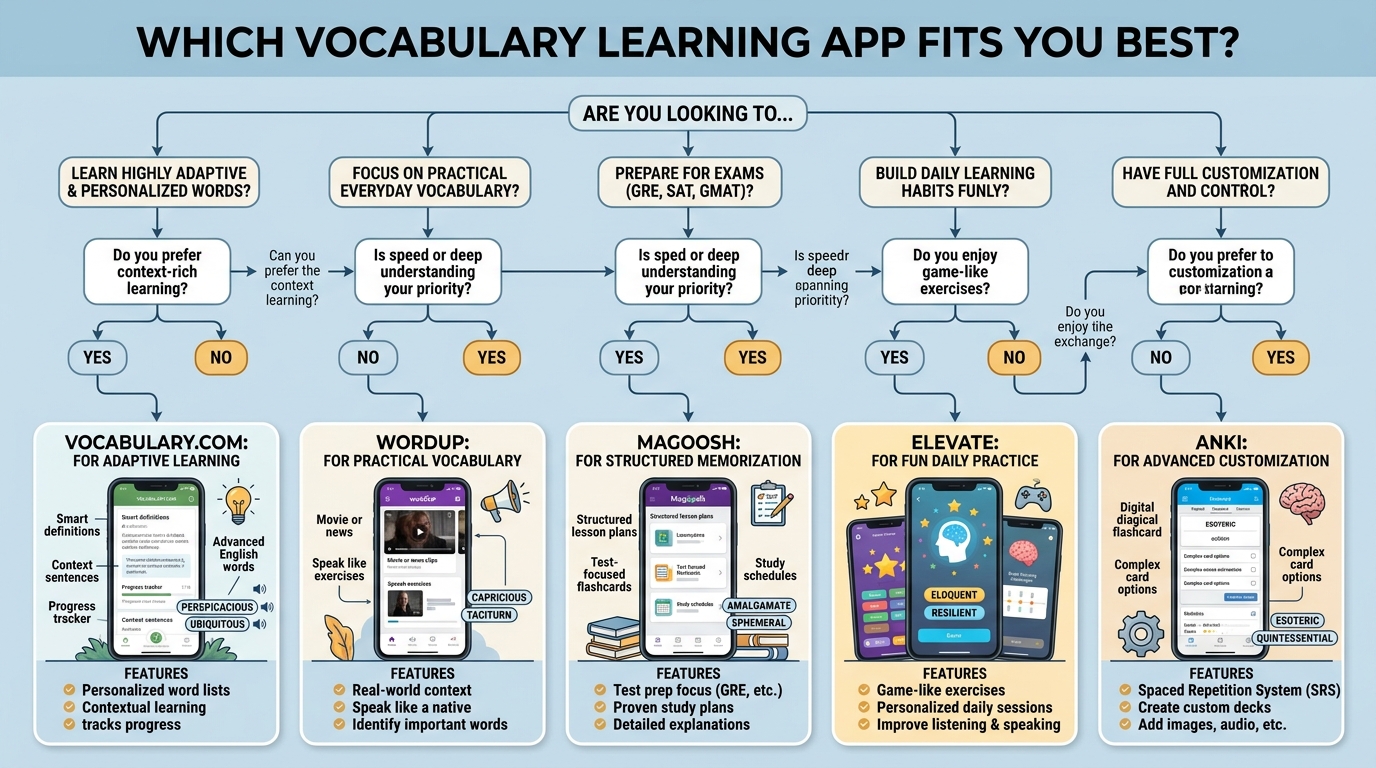
That said, the best app still depends heavily on learning style:
Choose Vocabulary.com for the smartest overall learning system.
Choose WordUp for practical real-world vocabulary growth.
Choose Magoosh Vocabulary Builder for structured memorization.
Choose Elevate for fun and engaging daily practice.
Choose Anki for maximum long-term customization and retention.
The biggest lesson from testing these apps is that advanced vocabulary is not built through occasional cramming sessions. It develops gradually through repeated exposure, contextual understanding, and consistent daily use. The best apps quietly make that process sustainable enough to become a real habit.