
Never Get Tourist-Trapped Again: 5 Apps That Find Real Local Street Food
Finding genuinely good street food used to depend on luck, local friends, or blindly following crowds. Now, travelers face a different problem: fake reviews, influencer hype, outdated blog posts, and algorithm-heavy restaurant apps that bury small vendors beneath chain restaurants.
That frustration is exactly why specialized food discovery apps are becoming essential for travelers and food enthusiasts alike.
To build this list, these apps were tested across multiple real-world scenarios: locating active food trucks, discovering hidden local vendors, verifying whether reviews felt trustworthy, and checking whether recommendations actually led to memorable meals instead of tourist traps. Pricing models, community activity, and ease of use also played a major role.
Here are the best apps currently helping travelers find authentic local street food in 2026.
1. Restaurant Guru (iOS & Android)
The Reality Check: What Actually Works
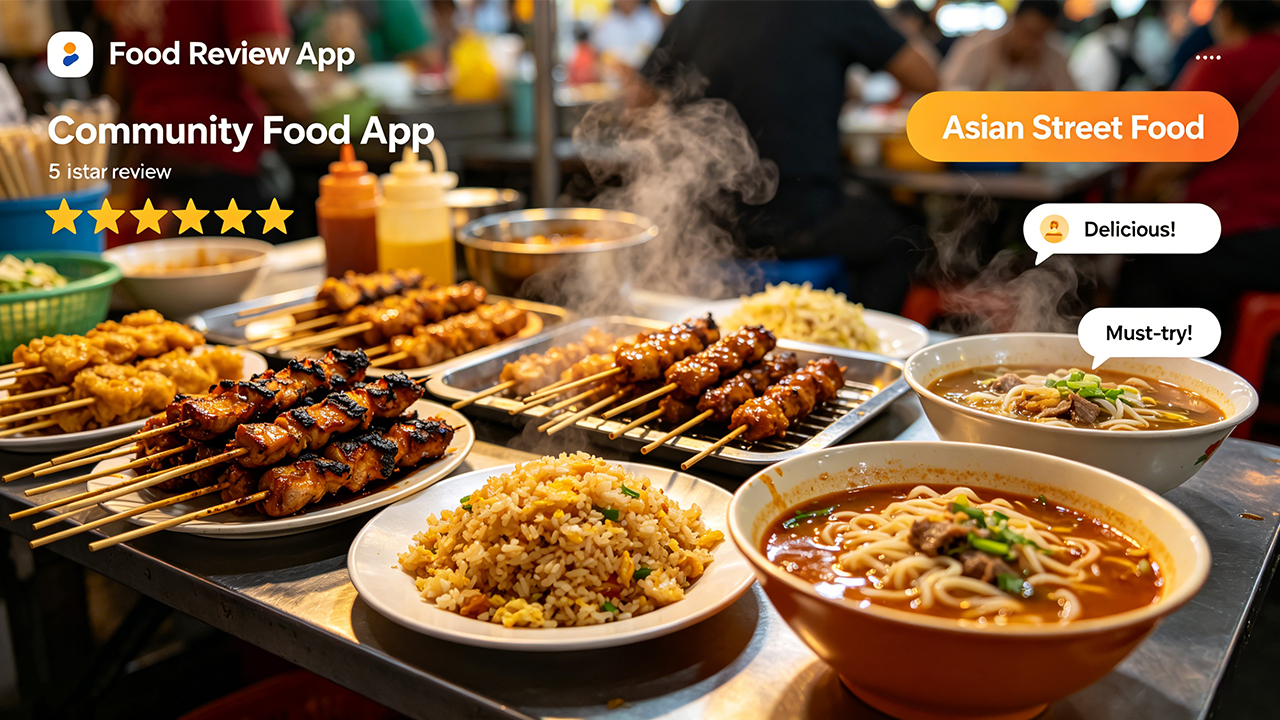
Restaurant Guru is not technically a “street food app,” but during testing, it consistently surfaced small local vendors, hidden food stalls, and neighborhood eateries better than many mainstream review platforms.
What makes the app effective is its aggregation system. Restaurant Guru pulls ratings and reviews from multiple platforms including Yelp, Google, Facebook, Michelin, and Zomato, then combines them into a single searchable experience.
In practice, this makes it surprisingly useful for verifying whether a tiny taco stand or late-night noodle stall is actually popular with locals instead of inflated by fake reviews.
The app’s filtering system also performed well during testing. Searches by dish type, budget, cuisine, and distance helped uncover small vendors that usually disappear inside larger apps like Google Maps.
Pricing:
Free
Pros
Pulls ratings from multiple review platforms
Excellent search filters for cuisine and price
Strong global coverage
Helpful for verifying legitimacy of smaller vendors
Free to use
Cons
Interface feels slightly outdated
Still leans heavily toward restaurants over true street vendors
User-generated photos vary in quality
Best For
Travelers who want a reliable verification layer before trying unfamiliar local food spots.
2. Burpple (iOS & Android)
The Reality Check: What Actually Works
Burpple remains one of the strongest community-driven food discovery apps available today.
During testing, the app consistently delivered detailed food photos, honest user reviews, and genuinely useful recommendations for hawker stalls, local snack vendors, and budget street-food spots. Unlike heavily commercialized review apps, Burpple still feels relatively community-focused.
Its strongest advantage is review quality. Most posts include actual meal photos rather than generic marketing images, making it easier to judge whether a vendor is worth visiting.
Burpple also performs well for discovering trending local favorites that tourists often miss.
Pricing:
Core app: Free
Optional subscription available for dining perks
Pros
Strong community-generated reviews
Excellent food photography
Reliable recommendations in active cities
Good mix of restaurants and street-food vendors
Helpful search and bookmark features
Cons
Best coverage remains concentrated in Asia-Pacific regions
Subscription prompts can feel repetitive
Smaller city coverage is inconsistent
Best For
Travelers who prefer crowd-sourced recommendations with visual proof before committing to a food stop.
3. Puestazo (iOS)
The Reality Check: What Actually Works
Puestazo is one of the few apps built specifically around street food instead of traditional restaurants.
During testing, the app excelled at locating taco stands, pop-up vendors, and neighborhood food carts that barely appeared elsewhere online. The live-map approach worked especially well in dense urban areas where vendors frequently move locations.
Community submissions also helped keep vendor listings surprisingly fresh. That matters because one of the biggest frustrations with food-truck discovery is outdated information.
Puestazo feels lightweight, focused, and refreshingly simple compared to bloated restaurant platforms.
Pricing:
Free
Pros
Specifically designed for street-food discovery
Live maps work well
Community-updated vendor listings
Lightweight and easy to navigate
Excellent for food truck hunting
Cons
Currently iPhone-only
Smaller database than mainstream review apps
Coverage still expanding
Best For
Travelers who mainly care about food trucks, taco stands, and authentic local carts.
4. Truckster (iOS & Android)
The Reality Check: What Actually Works
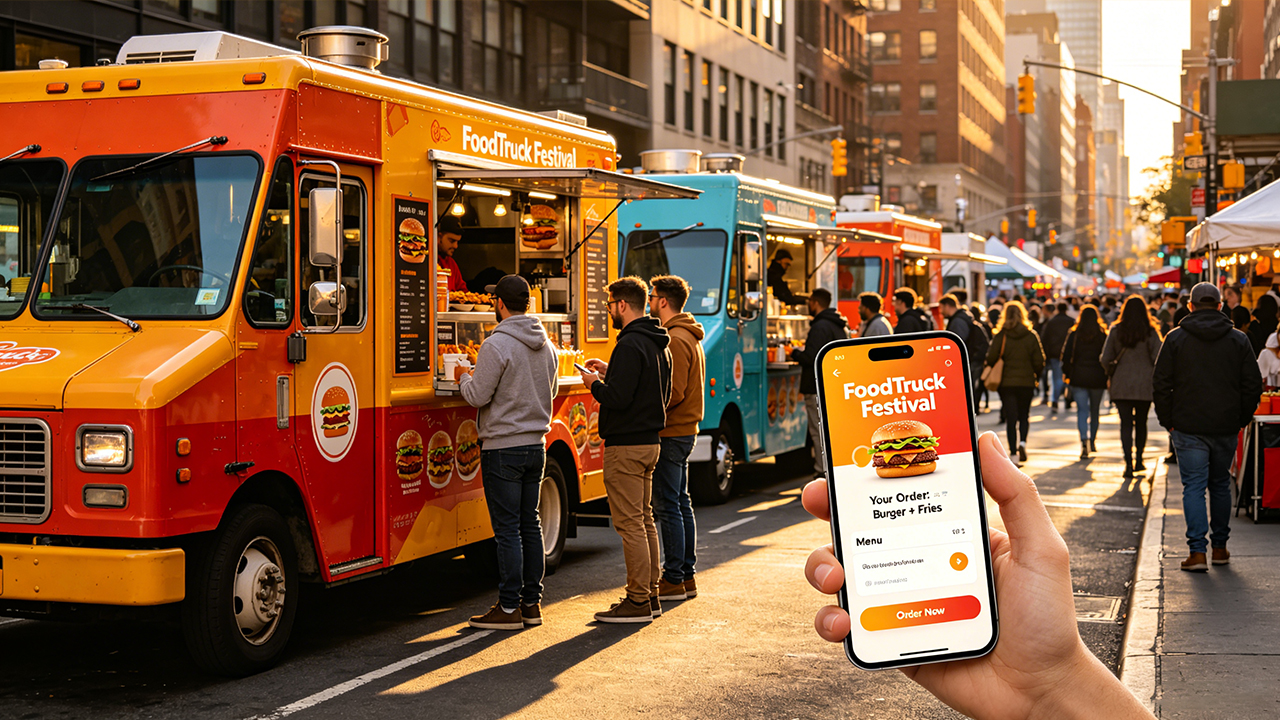
Truckster ended up being one of the more practical food-truck discovery apps tested, especially in large US metro areas with active street-food scenes.
The app focuses heavily on real-time food truck discovery rather than static restaurant reviews. During testing, its strongest feature was the live location map, which made it much easier to find active vendors without scrolling through outdated Instagram posts or Twitter updates. The app also allows users to view menus, ratings, and vendor schedules directly inside the platform.
Another feature that worked surprisingly well was mobile ordering. In cities where participating vendors supported it, users could skip long food-truck lines entirely and order directly through the app. That became genuinely useful during busy lunch hours and weekend food-truck events.
Truckster also supports vendor following and event discovery, helping users track favorite trucks across different neighborhoods.
Pricing:
Free
Pros
Real-time food truck maps work reliably
Available on both iPhone and Android
Mobile ordering is genuinely useful
Helpful ratings and menu previews
Strong coverage in several major US cities
Cons
Coverage still varies by city
Smaller towns may have limited vendor participation
Interface occasionally feels crowded
Best For
Travelers and food-truck fans who want live vendor tracking and up-to-date street-food discovery in major urban areas.
5. Dianping (iOS & Android)
The Reality Check: What Actually Works
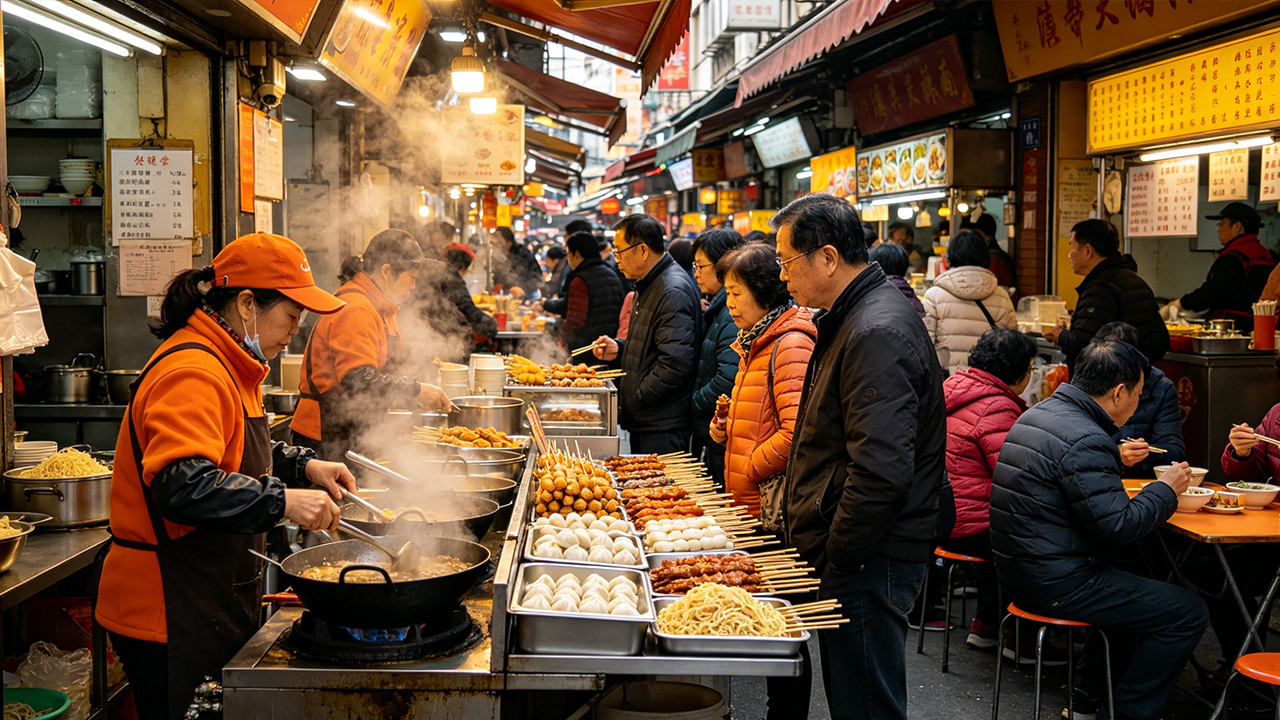
For travelers visiting Asian cities, Dianping remains one of the most powerful food discovery tools available.
The app includes massive amounts of user-generated content covering local snack stalls, market vendors, neighborhood eateries, and tiny food shops that rarely appear in Western apps. During testing, Dianping repeatedly surfaced excellent local recommendations completely absent from Google Maps.
Its photo-heavy review system also helps verify whether vendors are genuinely popular.
The downside is accessibility. Non-Chinese speakers may struggle with navigation and review translations, but travelers willing to work through the interface are often rewarded with significantly more authentic recommendations.
Pricing:
Free with optional in-app purchases
Pros
Massive database of local food vendors
Extremely strong in Asian cities
Huge amount of user-uploaded photos
Excellent for hyper-local discoveries
Highly active user community
Cons
Language barrier for some travelers
Interface can feel overwhelming
Less beginner-friendly than Western apps
Best For
Travelers exploring Asian street-food scenes who want deeply local recommendations.
The Final Verdict
After extensive testing, no single app completely dominates every street-food scenario. The best choice depends heavily on how travelers actually eat.
For overall reliability and global usefulness, Restaurant Guru emerged as the most practical all-around option. Its aggregated review system makes it remarkably effective at verifying whether small local vendors are genuinely respected instead of artificially hyped.
However, specialized apps still outperform it in certain situations.
Travelers chasing live food trucks should install Truckster.
Community-review lovers will likely prefer Burpple.
Dedicated street-food hunters should absolutely try Puestazo.
Travelers in Asia will get enormous value from Dianping.
One thing became obvious throughout testing: the best street-food discoveries rarely come from traditional restaurant apps anymore. The most memorable meals are increasingly found through smaller, community-driven platforms that prioritize local food culture over sponsored rankings.