

Master Your Salary Negotiation: 5 Best Apps for Scripts in 2026
Negotiating your salary is one of the few conversations that can directly change your financial future in a matter of minutes. But despite the stakes, most people walk into these discussions underprepared. They scroll through a few Reddit threads, memorize a couple of phrases from LinkedIn, and hope confidence will carry them through.

In reality, successful salary negotiation usually comes down to preparation. And one of the most underrated tools you can have is a solid script.
A good negotiation script keeps emotions from taking over the conversation. It helps you stay focused, communicate your value clearly, and avoid underselling yourself under pressure. Whether you are negotiating a new job offer, asking for a raise, or discussing a promotion, having the right talking points ready can make the entire process feel far less intimidating.
To find the most useful tools available right now, we tested a range of career development and negotiation apps across Android and iOS. We focused on apps that help users prepare realistic talking points, practice difficult conversations, calculate compensation expectations, or improve confidence before entering a negotiation meeting.
Here are the best salary negotiation apps worth trying in 2026.
1. PayBoost: AI Salary Coach(iOS/Android)
PayBoost feels designed for professionals who want more than a collection of static templates. Instead of simply giving you a few generic negotiation lines, it tries to simulate the pressure of a real compensation discussion.
During testing, the app’s strongest feature was its AI-powered practice mode. Rather than passively reading scripts, you enter a mock conversation where the AI responds like a hiring manager or recruiter. Sometimes it pushes back on your salary request. Other times it challenges your reasoning or asks for justification behind your number.
That interaction turns out to be surprisingly useful. Many people know what salary they want, but struggle when the employer asks, “Why do you believe that number is appropriate?” Practicing those moments ahead of time helps reduce hesitation during the real conversation.
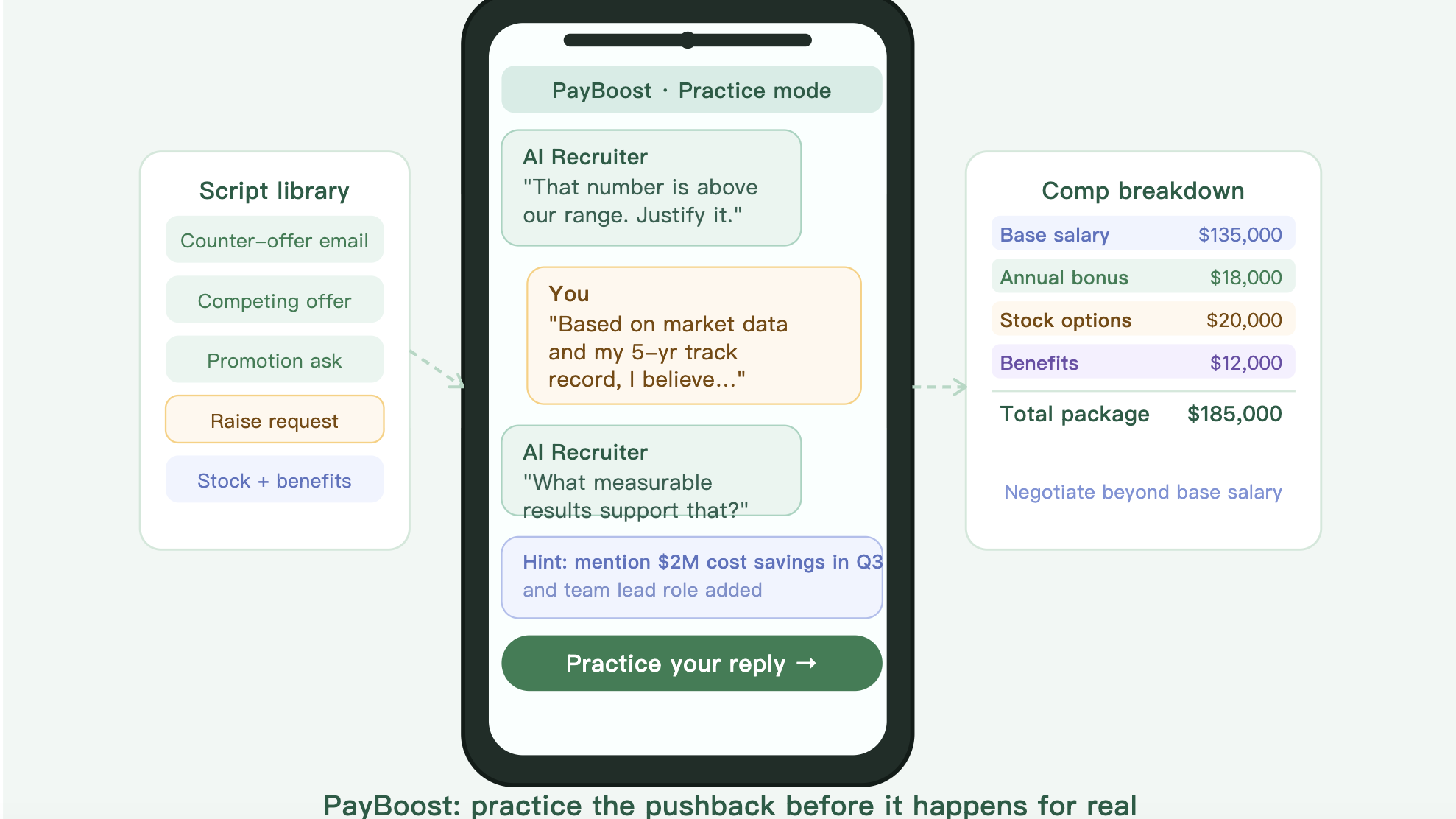
The app also includes tools for drafting counter-offer emails and organizing compensation discussions around base salary, bonuses, stock options, and benefits instead of focusing only on headline numbers.
Pros:
AI roleplay simulations make practice feel more realistic than reading scripts alone.
Helpful framework for structuring compensation discussions beyond salary alone.
Generates polished templates for raises, promotions, and competing-offer scenarios.
Cons:
The most useful coaching features require a subscription.
Salary benchmarking tools should still be cross-checked with external platforms like Levels.fyi, Glassdoor, or Blind.
2. Jobjuice – Salary Negotiation(iOS/Android)
Jobjuice takes a very different approach. Instead of trying to reinvent negotiation coaching with AI, it focuses on straightforward preparation and proven negotiation techniques.
The app is built around bite-sized “cards” that cover common salary discussion scenarios: responding to a low initial offer, handling pressure to reveal your current salary, or negotiating after receiving multiple offers.
What makes Jobjuice effective is its simplicity. Before a meeting, you can quickly skim through practical talking points without getting overwhelmed by dashboards, analytics, or simulated interviews. During testing, it felt more like carrying a digital cheat sheet than using a modern AI productivity app — and honestly, that is part of its appeal.
The negotiation advice is based on traditional sales and negotiation strategies, including concepts popularized by professional negotiation trainers like Roger Dawson.
Pros:
Clean, distraction-free format that is easy to review before interviews.
Covers a wide variety of real-world negotiation situations.
Most content works offline, which is useful for quick last-minute prep.
Cons:
The interface feels somewhat dated compared to newer apps.
Currently limited to iOS users.
3. Career Assistant by pepelwerk(iOS/Android)
Pepelwerk is less of a dedicated negotiation app and more of a career-positioning platform. That may sound broad, but it actually fills an important gap that many salary tools ignore.
One of the biggest reasons people struggle during negotiations is that they cannot clearly explain their value. They know they work hard, but they have difficulty turning that experience into a persuasive professional narrative.
Pepelwerk tries to solve that problem by helping users organize their accomplishments, skills, certifications, and career goals into a more structured profile. During testing, this made it easier to identify measurable achievements that could later be used in raise discussions or promotion requests.
The app also connects users with career coaching services, which may appeal to professionals navigating major transitions or leadership roles.
Pros:
Strong focus on long-term career positioning rather than just salary scripts.
Helps users articulate accomplishments more effectively.
Includes optional coaching resources for more personalized guidance.
Cons:
Negotiation tools are only one part of a much broader platform.
Setting up your profile properly takes time and effort.
4. Net Salary Compare – Offer(iOS/Android)
Not every salary negotiation problem is emotional. Sometimes the biggest challenge is simply understanding the math.
A higher salary does not always translate into a dramatically higher paycheck once taxes, insurance deductions, retirement contributions, and cost-of-living changes are factored in. That is where Net Salary Compare becomes surprisingly useful.
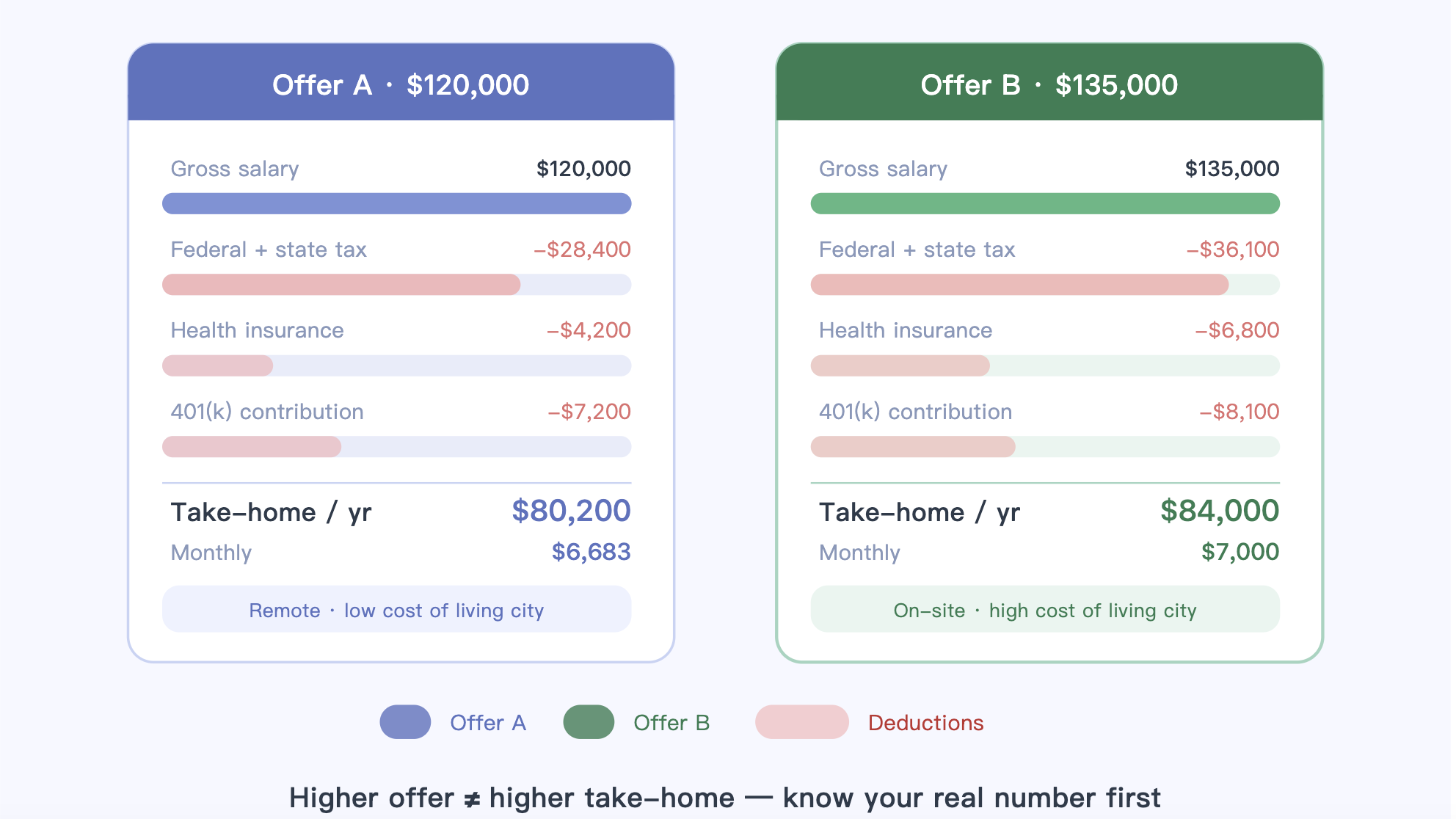
This app focuses on helping users compare compensation scenarios side by side. You can quickly estimate how much an offer actually changes your monthly take-home pay and determine whether a proposed raise is worth pursuing.
During testing, it worked best as a companion tool rather than a standalone negotiation coach. It will not teach you how to negotiate, but it can help you decide what number you realistically need before entering the conversation.
Pros:
Excellent for comparing real take-home income scenarios.
Fast, lightweight, and easy to use.
Useful for evaluating relocation offers or percentage-based raises.
Cons:
Offers little guidance on negotiation strategy itself.
Tax estimates may vary depending on region and individual financial situations.
5. LinkedIn Learning(iOS/Android)
While it is not a traditional negotiation app, LinkedIn Learning has quietly become one of the better resources for practicing compensation discussions in a realistic way.
The platform includes negotiation-focused courses taught by recruiters, leadership coaches, and HR professionals. Many of these courses include sample scripts, mock conversations, and frameworks for discussing raises without sounding overly aggressive or apologetic.
What stood out during testing was the emphasis on communication style. A lot of negotiation advice online focuses only on “winning,” but LinkedIn Learning spends more time teaching users how to sound calm, collaborative, and professional — which is often what actually leads to successful outcomes.
Because the lessons are video-based, it can also feel less intimidating for people who are nervous about negotiation conversations.
Pros:
Taught by experienced career coaches and recruiters.
Strong focus on delivery, tone, and confidence.
Includes broader career development content beyond salary negotiation.
Cons:
Requires an ongoing subscription after the free trial period.
Not as interactive as dedicated AI coaching apps.
The Final Verdict
For most professionals in 2026, PayBoost: AI Salary Coach stands out as the strongest all-around option. Its practice simulator helps bridge the gap between “knowing what to say” and actually saying it confidently under pressure.
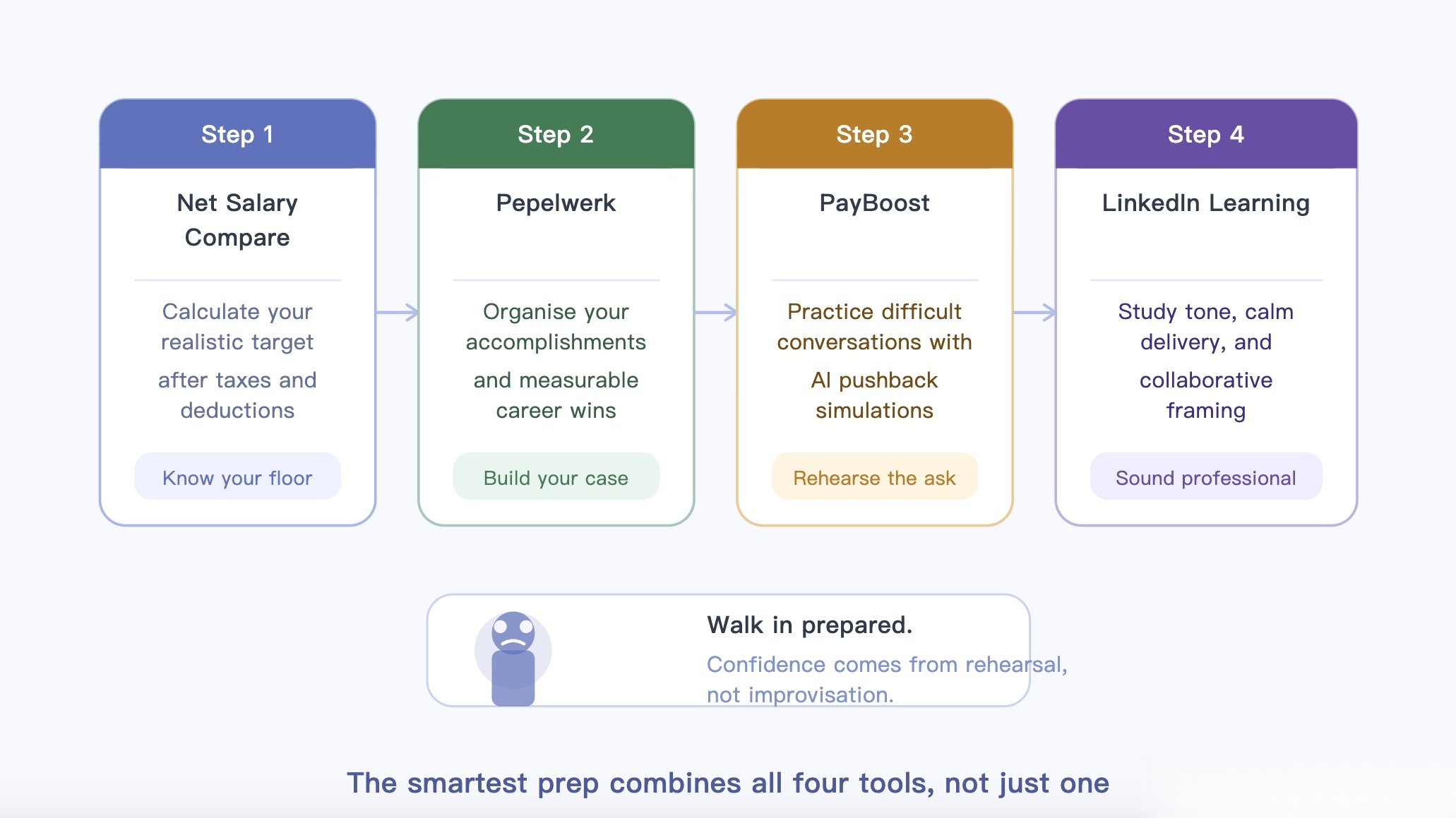
That said, the best negotiation preparation often comes from combining tools rather than relying on a single app. A realistic workflow might look something like this:
Use Net Salary Compare to calculate your ideal compensation target.
Use Pepelwerk to organize your accomplishments and measurable impact.
Use PayBoost to practice difficult conversations before the real meeting.
Supplement everything with negotiation lessons from LinkedIn Learning.
At the end of the day, salary negotiation is not about memorizing clever lines or trying to “win” against HR. It is about clearly communicating your value, understanding your market position, and staying calm enough to advocate for yourself effectively.
And like any professional skill, confidence usually comes from preparation — not improvisation.
Preparing for a raise or job offer soon? The smartest thing you can do before the conversation is rehearse it out loud. Even ten minutes of practice can completely change how confidently you present yourself when the real discussion begins.