
Lost Luggage Nightmare? These 5 Android Apps Track Your Bags in Real Time
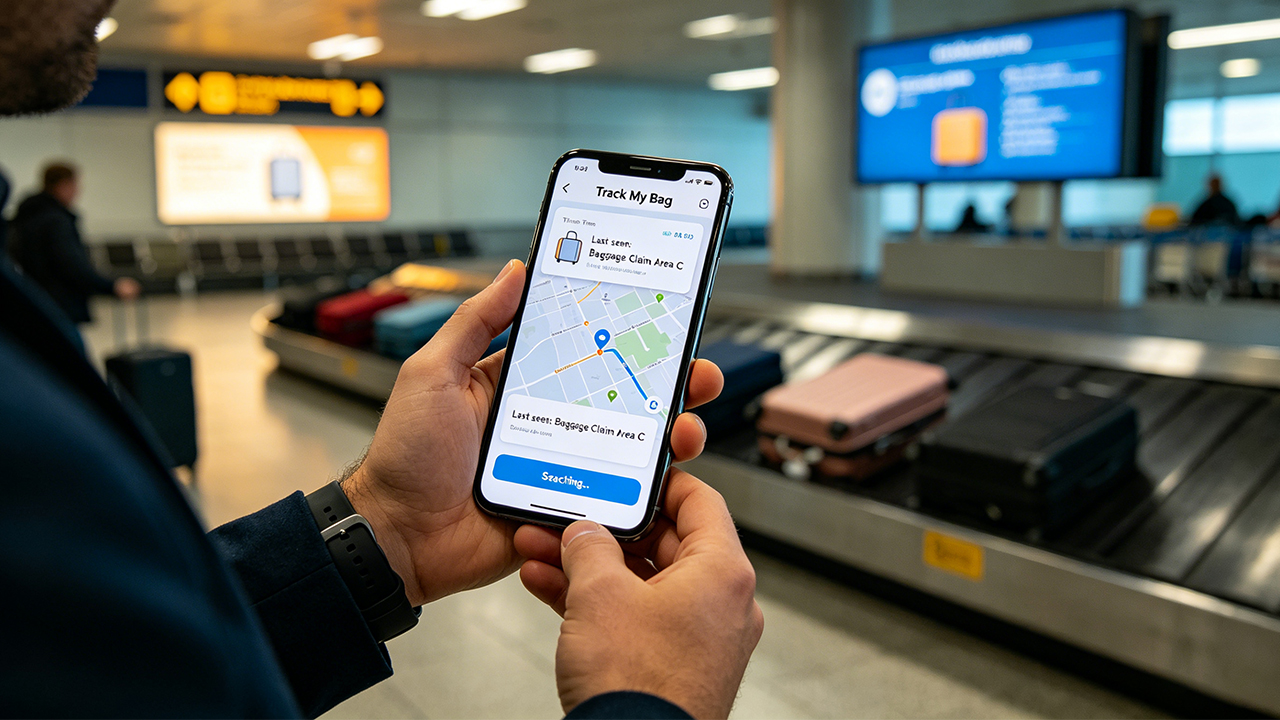
Travel Essential: Welcome to the Era of the “Digital Baggage Agent”
Few travel experiences feel worse than standing beside a baggage carousel as it slows to a stop — while a traveler’s suitcase never appears. According to SITA, the global airline industry mishandled roughly 6.3 bags per 1,000 passengers in 2024, totaling an estimated 33.4 million lost or delayed bags worldwide.
The good news is that Bluetooth trackers have evolved far beyond simple key-finding gadgets. By 2026, deep integration between tracking hardware, companion apps, and airline recovery systems has transformed these devices into something much more powerful: smart luggage-monitoring tools capable of giving travelers actionable, real-time information instead of vague reassurances.
Modern tracker ecosystems can now help travelers confirm whether a suitcase made it onto a connecting flight, determine if it is still sitting at a departure airport, or even provide precise terminal-level location data to airline staff during recovery claims. In many cases, travelers can locate misplaced luggage faster than the airline itself.
Methodology: The recommendations below are based on hands-on testing and comparative reviews of leading luggage-tracker apps conducted between 2025 and mid-2026. Each platform was evaluated based on location accuracy, airline integration, global network coverage, bonus travel features, reliability, and overall value for frequent travelers.
1. Google Find Hub: The Most Powerful Luggage-Tracking Hub for Android Users(Android)
Price: The app is free, though it requires a compatible Bluetooth tracker such as the Chipolo ONE Point, Pebblebee Clip Universal, or Motorola Moto Tag 2, typically priced between $20 and $35.
The Reality Check
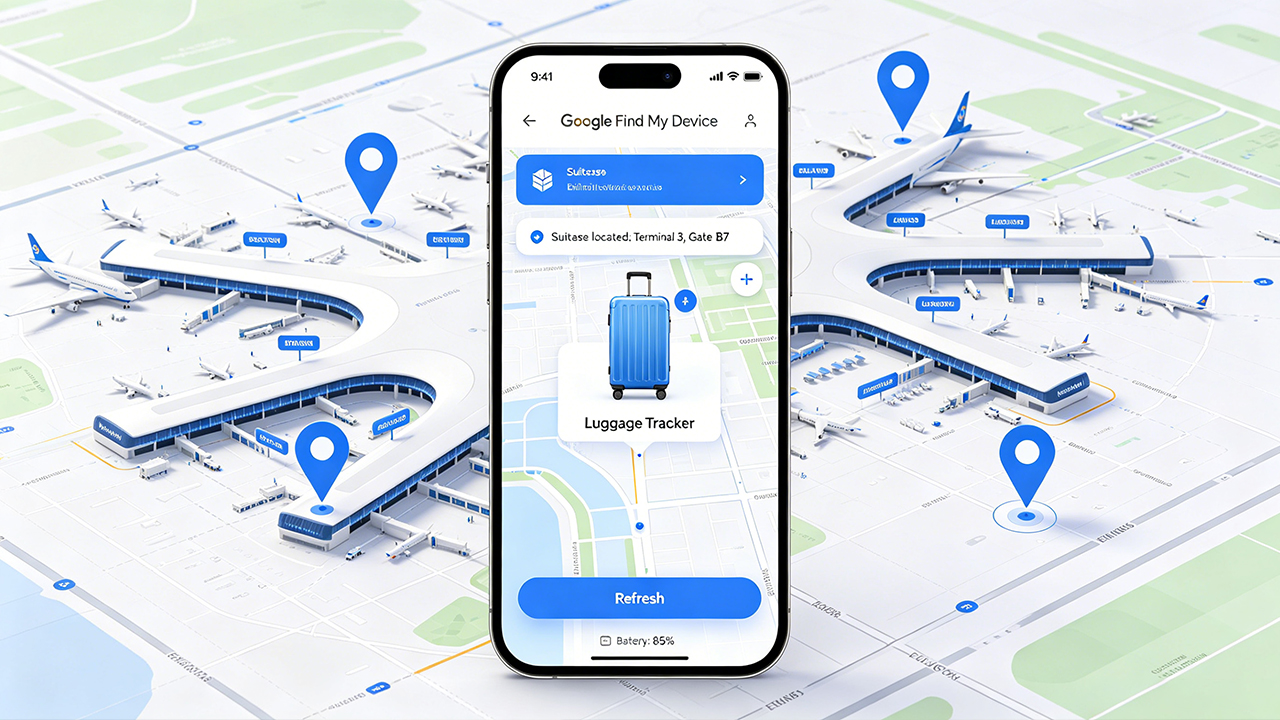
In March 2026, Google officially rebranded its “Find My Device” platform as Find Hub, and the update significantly expanded its usefulness for travelers. The most important addition was the ability for users to generate secure, encrypted sharing links directly inside the Find Hub app and provide temporary live tracker access to participating airlines. If checked luggage fails to arrive, baggage recovery teams can now view the real-time location of a traveler’s tracker rather than relying exclusively on the airline’s internal baggage systems, substantially improving the odds of rapid recovery.
By mid-2026, more than 10 major international airlines had integrated the feature, including Lufthansa, Turkish Airlines, Air India, China Airlines, and Scandinavian Airlines, while Qantas was widely expected to join the program soon. Google has also partnered with SITA and Reunitus, the organizations behind the WorldTracer and NetTracer baggage systems used across hundreds of airlines globally.
The network itself leverages nearly every Android 9+ device as a passive location relay. In practice, that means luggage sitting inside most airport terminals can periodically broadcast its location back to the owner through nearby Android devices, even if the bag itself has no cellular connection. With more than one billion downloads on Google Play, Find Hub benefits from one of the largest crowdsourced tracking ecosystems currently available.
Pros
Deep Android ecosystem integration with pre-installed support on many modern devices
Massive crowdsourced tracking network powered by billions of Android phones worldwide
Secure airline-sharing links that automatically expire after seven days or once luggage is recovered
Completely free app with no subscription requirements
Privacy-focused controls that allow travelers to revoke sharing access at any time
Cons
No UWB Precision Finding support as of mid-2026, placing it behind Apple’s directional-tracking implementation
Tracking density may weaken in rural or low-population areas
Android-only ecosystem with no native iOS compatibility
For Android travelers, Find Hub has evolved from a simple lost-device locator into a legitimate airline-integrated luggage recovery platform. Its combination of scale, airline collaboration, and zero subscription cost makes it one of the strongest smart baggage-tracking systems currently available.
2. Tile: The Seasoned Veteran for Travelers Who Venture Beyond the Tourist Trail(Android & iOS)
Price: The Tile app is free to use. Premium features cost approximately $2.99 per month or $29.99 annually, unlocking Smart Alerts, unlimited sharing, and 30-day location history. Hardware options include the Tile Mate starting around $24.99 and the Tile Pro from roughly $34.99.
The Reality Check
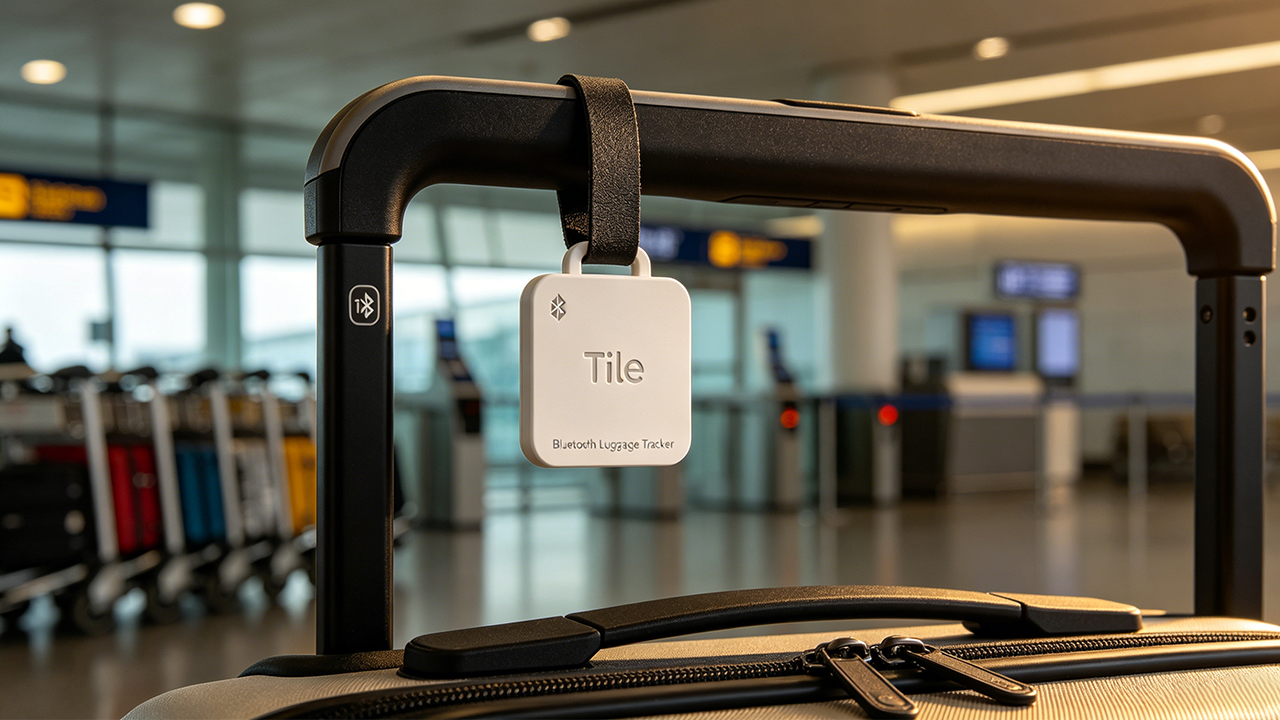
As one of the original pioneers of Bluetooth tracking technology, Tile has spent more than a decade building a mature and highly recognizable finding network. In hands-on reviews conducted throughout early 2026, Tile’s tracking reliability consistently performed well, particularly in densely populated urban areas and major airports where large numbers of nearby devices improve update frequency.
Among Tile’s hardware lineup, the Tile Pro emerged as the standout option for travelers. Its advertised Bluetooth range of roughly 400 feet (122 meters) is among the longest in the category, and its upgraded speaker produces Tile’s loudest alert tone to date — a surprisingly practical advantage when trying to locate luggage in crowded, noisy baggage claim areas.
For travelers who frequently move beyond major tourist hubs, Tile’s community-based recovery network becomes especially useful. If luggage is misrouted through a smaller airport or remote transfer point, the tracker can still be detected by nearby users running the Tile app. In the United States, the ecosystem gains additional reach through integration with Amazon Sidewalk, allowing participating Amazon devices to help relay location updates in supported regions. Tile also offers multiple hardware styles — including Mate, Pro, and Slim — making it easier to match different luggage types and travel setups.
Pros
Strong cross-platform support with a full-featured experience on both iOS and Android
Large and mature crowdsourced finding network, enhanced by Amazon Sidewalk integration in the United States
Feature-rich ecosystem including left-behind alerts, two-way phone finding, and location history
Exceptional Bluetooth range on Tile Pro, reaching up to 400 feet in open environments
Replaceable batteries on most tracker models
Cons
No UWB Precision Finding or directional arrow guidance
Several advanced features require a paid Premium subscription
Smaller overall network compared with Apple’s Find My ecosystem or Google’s Find Hub, potentially resulting in slower updates in low-density areas
Tile remains one of the most versatile luggage-tracking platforms available, particularly for travelers who value cross-platform compatibility and flexible hardware options. While it lacks some of the ultra-precise directional features offered by newer ecosystems, its mature infrastructure and long Bluetooth range continue to make it a dependable choice for frequent travelers.
3. Pebblebee: The Loudest Luggage Tracker for Travelers in a Hurry(Android & iOS)
Price: The Pebblebee app is free, though it requires compatible hardware such as the Pebblebee Clip 5, which typically costs around $35. No subscription is required.
The Reality Check
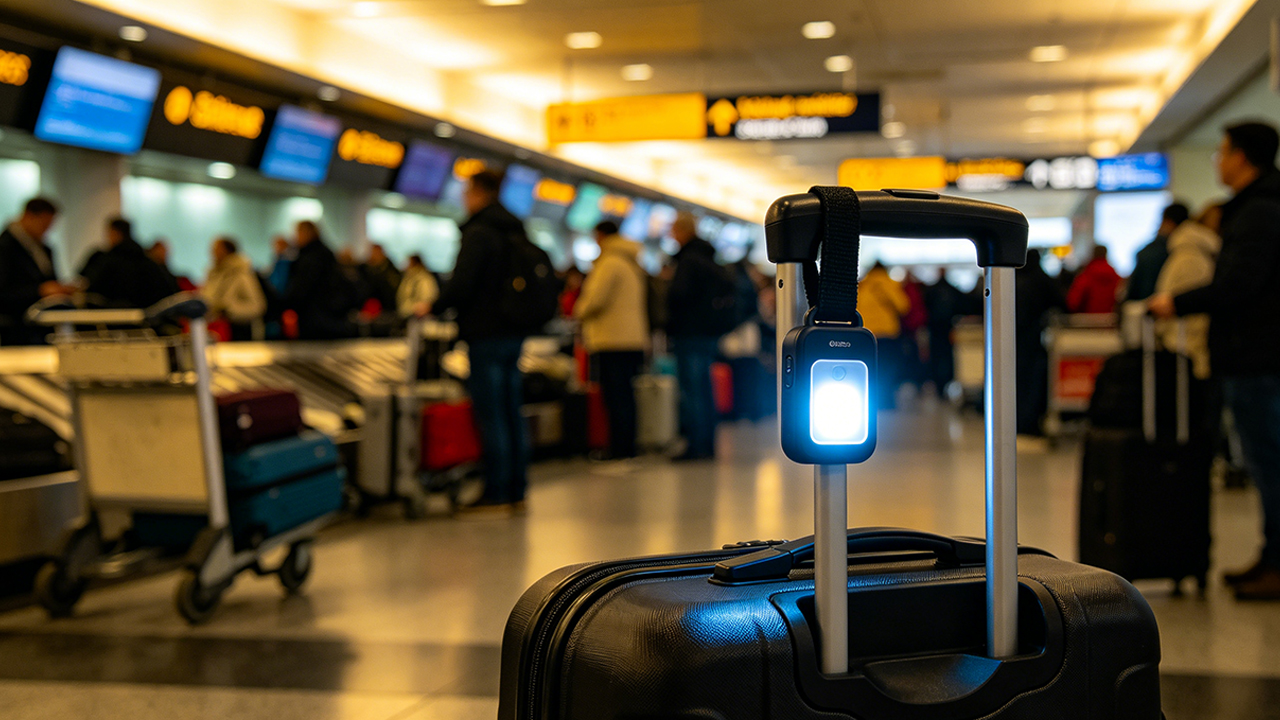
For travelers who depend on audio cues to locate belongings quickly, Pebblebee stands out immediately. The Pebblebee Clip 5 delivers a massive 130 dB alarm — among the loudest ever offered by a mainstream Bluetooth tracker — combined with a bright LED strobe designed for dim baggage claim areas and crowded travel environments. In practice, that aggressive sound alert often proves more useful than carefully studying a map while surrounded by dozens of nearly identical suitcases.
Pebblebee hardware operates primarily through Google’s Find Hub network, while the dedicated Pebblebee app handles firmware updates, custom naming, and volume settings. The hardware itself is especially travel-friendly: the Clip 5 includes an integrated carabiner-style attachment that connects directly to luggage straps without requiring additional holders or accessories.
Battery design is another major advantage. Instead of disposable coin-cell batteries, Pebblebee uses a rechargeable USB-C system capable of lasting up to 12 months on a single charge under typical use. During real-world testing throughout early 2026, Pebblebee trackers also demonstrated noticeable improvements in network responsiveness on Google’s Find Hub ecosystem, with some reviewers reporting location updates appearing within roughly one to four minutes during multi-country European trips.
The physical durability also compares favorably against competitors. With an IP66 water-resistance rating, the tracker is well protected against rain, dust, and the rough handling commonly associated with airport baggage systems.
Pros
Extremely loud 130 dB siren paired with an LED strobe for easy identification in noisy airports
Integrated clip design attaches directly to luggage without extra accessories
Rechargeable USB-C battery with up to 12 months of lifespan per charge
No subscription fees required for core functionality
IP66 water resistance suitable for harsh travel conditions
Cons
Each tracker can operate on either Apple Find My or Google Find Hub, but not both simultaneously
Companion app mainly functions as a settings utility, while the actual tracking experience depends heavily on Find Hub
No UWB Precision Finding or directional arrow guidance
Some users have reported occasional hardware reliability issues within the first year of ownership
Pebblebee is particularly well suited for travelers who prioritize fast physical identification over advanced mapping features. In loud, chaotic baggage environments where visual tracking can become frustrating, its powerful siren and flashing light system provide one of the most immediately practical recovery experiences available.
4. Chipolo: The Flexible, Cross-Ecosystem Choice for Frequent Travelers(Android & iOS)
Price: The Chipolo app is free to use, though it requires compatible hardware such as the Chipolo POP starting around $25 or the Chipolo CARD at roughly $30. No subscription is required.
The Reality Check
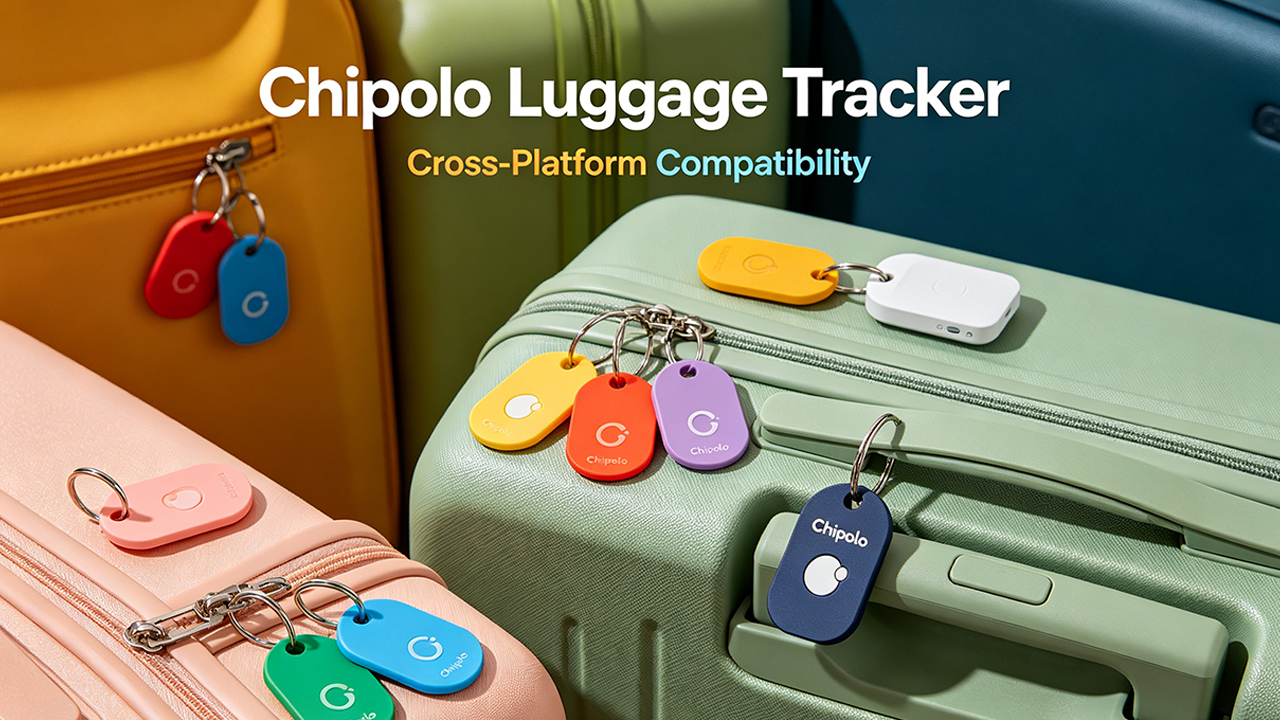
Chipolo has established a unique position in the 2026 luggage-tracker market by focusing heavily on network flexibility. Unlike many competitors that lock hardware into a single ecosystem, Chipolo trackers — including the POP, LOOP, and CARD models — can be paired with either Apple Find My or Google Find Hub. That flexibility is particularly appealing for travelers who may switch between Android and iPhone devices in the future or who live in mixed-device households.
Among the lineup, the Chipolo POP has emerged as one of the strongest all-around tracker options in 2026 reviews. It combines compatibility with both major tracking ecosystems, a louder alert tone than Apple’s AirTag, a built-in attachment hole for direct luggage mounting, and several useful companion-app features that go beyond the default capabilities of Apple Find My or Google Find Hub.
The Chipolo app itself adds meaningful practical extras. Travelers can customize ringtone sounds, trigger their misplaced phone to ring even while it remains in silent mode, and activate a “Lost & Found” QR code system that allows anyone who discovers the luggage to contact the owner simply by scanning the tracker. That feature creates a direct recovery path even when Bluetooth-based tracking becomes unavailable.
Visually, Chipolo trackers also stand apart from the minimalist designs common in the category. Bright color variations make them noticeably easier to identify on backpacks, luggage handles, or crowded charging tables.
Pros
Flexible dual-network compatibility with either Apple Find My or Google Find Hub
Bright and colorful hardware designs that stand out on luggage
Built-in Lost & Found QR code system for easier recovery by strangers
Integrated attachment hole eliminates the need for separate accessories
No subscription fees required
Cons
No UWB Precision Finding or directional arrow navigation
Alert volume is stronger than AirTag but noticeably quieter than Pebblebee’s 130 dB siren
The Chipolo CARD model uses a sealed non-replaceable battery with an estimated two-year lifespan
Chipolo is especially well suited for travelers who value flexibility and long-term ecosystem compatibility. Rather than locking users into a single platform, it offers one of the most adaptable tracker experiences currently available, making it an attractive option for travelers whose devices — and travel habits — may evolve over time.
5. Samsung SmartThings Find: The Ecosystem Favorite for Galaxy Travelers(Android)
Price: The SmartThings app is free, though it requires compatible hardware such as the Samsung Galaxy SmartTag2, typically priced between $20 and $30.
The Reality Check
For users deeply invested in the Samsung ecosystem, SmartThings Find serves as the company’s direct counterpart to Apple’s Find My platform — and in practice, it delivers one of the most polished luggage-tracking experiences currently available on Android.
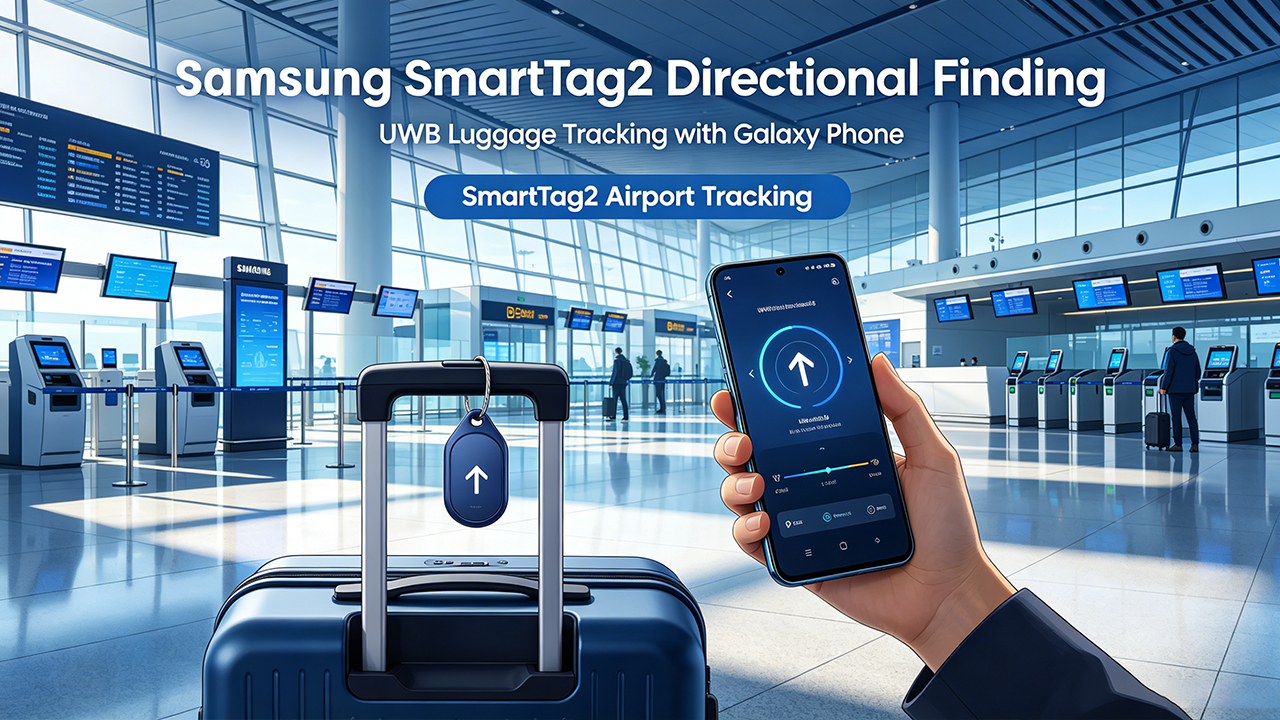
When paired with the Galaxy SmartTag2, setup is fast and tightly integrated into Samsung Galaxy phones. Tracking responsiveness consistently performs at a high level, especially in regions where Samsung device density is particularly strong, including South Korea, large parts of Europe, and Southeast Asia. In those markets, Samsung’s crowdsourced finding network can occasionally outperform more generalized Bluetooth-tracking ecosystems.
One of the biggest technical advantages is support for both Bluetooth Low Energy and Ultra-Wideband (UWB) tracking. On compatible Galaxy phones, this enables precise directional guidance that closely mirrors the highly praised AirTag experience available on iPhones. Instead of merely showing approximate location data on a map, users can receive near real-time directional cues guiding them directly toward misplaced luggage.
Battery performance is another standout feature. Samsung rates the SmartTag2 for up to 500 days of use on a single replaceable CR2032 battery, while the IP67 water- and dust-resistance certification gives the hardware enough durability to survive harsh baggage-handling environments.
Samsung also includes an unusual offline-finding capability. Even if nearby Galaxy devices temporarily lack internet connectivity, they can still relay Bluetooth detection data once a connection becomes available again. In difficult edge-case situations — such as underground transit systems or poorly connected airport zones — that functionality may occasionally improve recovery chances.
Pros
Deep integration with Samsung Galaxy phones for a highly polished user experience
UWB Precision Finding offers directional tracking comparable to Apple AirTag
Offline relay capability allows tracking through nearby Galaxy devices even without immediate internet access
Excellent battery life of up to 500 days using a replaceable CR2032 battery
IP67-rated protection against water and dust for travel durability
Cons
Core tracking functionality is effectively locked to Samsung Galaxy devices
No meaningful iOS compatibility for iPhone users
The SmartThings app can feel crowded and complex because device tracking is only one part of a much larger smart-home platform
For Samsung Galaxy owners, SmartThings Find represents one of the most capable and technically refined luggage-tracking systems available. Its combination of UWB directional finding, long battery life, and strong ecosystem integration makes it especially compelling for travelers already committed to Samsung hardware.
Final Verdict: How Travelers Should Choose the Right Luggage-Tracking App
Choosing a luggage-tracking platform in 2026 depends less on finding a universally “best” app and more on matching the right ecosystem to the traveler’s phone, habits, and priorities. Different trackers excel in very different situations, and the strongest option often comes down to how someone actually travels.
For Android users who prioritize airline integration and large-scale baggage recovery support, Google Find Hub stands out as the strongest overall choice. Its direct partnerships with more than 10 international airlines — combined with integration into global baggage systems through SITA and Reunitus — place it at the forefront of modern smart luggage recovery.
Travelers who value long-term flexibility across both Android and iPhone ecosystems are better served by Chipolo or Tile. Both platforms support cross-platform usage, making them especially appealing for users who may switch phone brands in the future or share devices within mixed-platform households.
For travelers who want the most aggressive physical recovery tools in crowded baggage areas, Pebblebee offers the loudest and most attention-grabbing experience. Its 130 dB siren and flashing LED strobe often prove more useful in chaotic baggage halls than staring at a map surrounded by rows of nearly identical black suitcases.
Meanwhile, travelers already deeply invested in the Samsung ecosystem will likely get the smoothest experience from SmartThings Find paired with the Samsung Galaxy SmartTag2. Its UWB directional tracking rivals Apple’s AirTag experience and performs particularly well in regions where Samsung device density is high.
For travelers who see community-based recovery as an important backup layer, both Tile and Chipolo provide useful crowdsourced recovery systems and Lost & Found features that can occasionally reconnect owners with luggage even after official airline tracking fails.
What ultimately unites all five platforms is that none of them can stop an airline from misrouting luggage in the first place. What they can do is transform the experience from helpless uncertainty into informed decision-making. Knowing whether a suitcase is still sitting at the departure airport, already loaded onto a connecting flight, or waiting in another terminal gives travelers something airlines often struggle to provide quickly: clarity.
In 2026, traveling without a Bluetooth luggage tracker is no longer just missing out on a convenience feature. For many frequent travelers, it increasingly feels like taking an avoidable risk.